









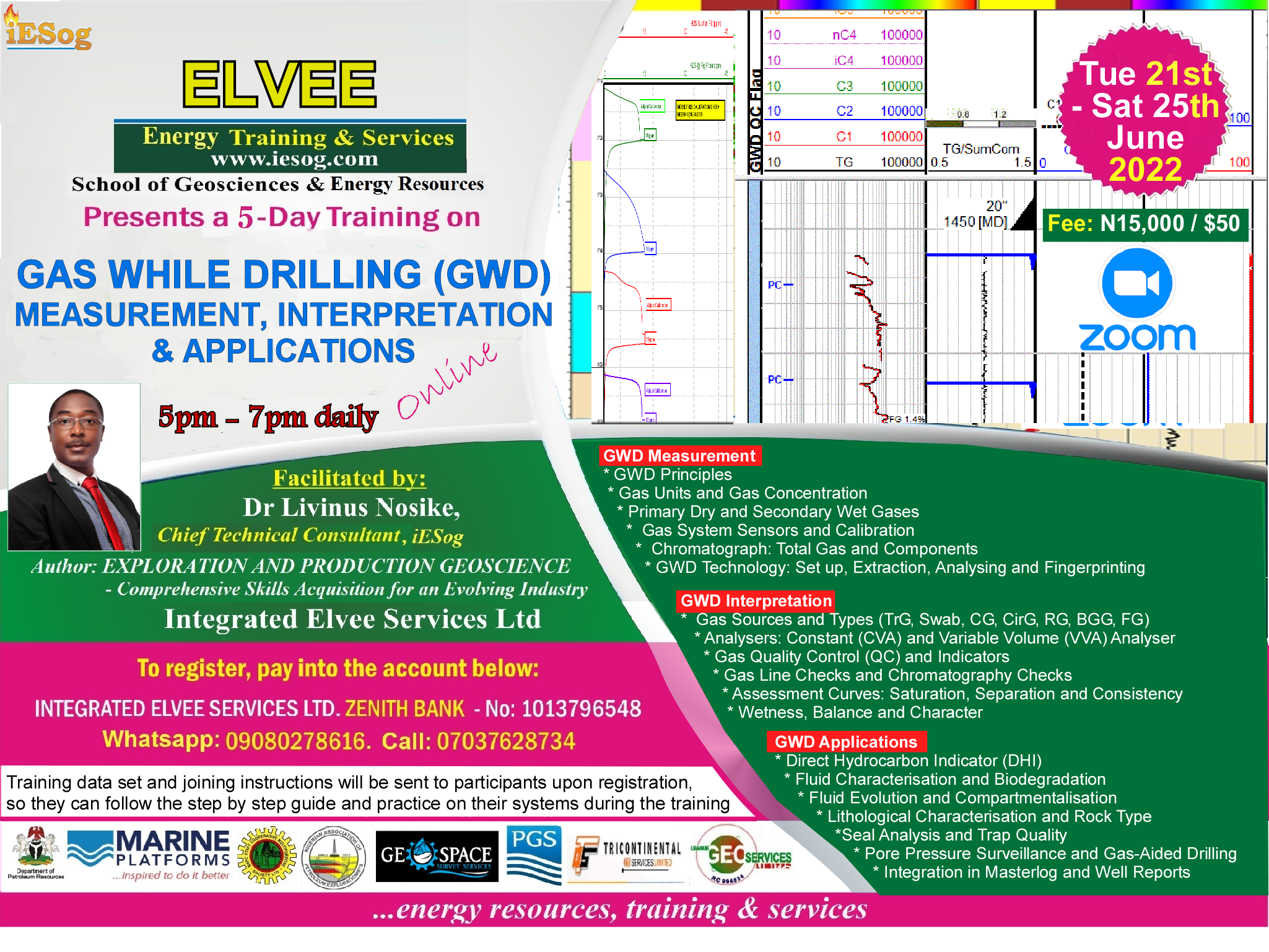
With the new drive to gradually replace oil with gas, interest in gas deposits is becoming a national and international policy. Oil deposit usually have associated gas and before reaching reservoir targets, information from biogenic and thermogenic gases can provide useful guide in well drilling, petroleum results and field development. Our Gas While Drilling module aims at optimising Gas Technology skills for individuals and corporate organisations in the industry. Taking advantage of this online edition will help you acquire skills on:
Gas Measurement
- GWD Principles
- Gas Units and Gas Concentration
- Primary Dry and Secondary Wet Gases
- Gas System Sensors and Calibration
- Chromatograph: Total Gas and Components
- GWD Technology: Set up, Extraction, Analysing and Fingerprinting
Gas Interpretation
- Gas Sources and Types (TrG, Swab, CG, CirG, RG, BGG, FG)
- Analysers: Constant (CVA) and Variable Volume (VVA) Analyser
- Gas Quality Control (QC) and Indicators
- Gas Line Checks and Chromatography Checks
- Assessment Curves: Saturation, Separation and Consistency
- Wetness, Balance and Character
GWD Applications
- Direct Hydrocarbon Indicator (DHI)
- Fluid Characterisation and Biodegradation
- Fluid Evolution and Compartmentalisation
- Lithological Characterisation and Rock Type
- Seal Analysis and Trap Quality
- Pore Pressure Surveillance and Gas-Aided Drilling (GAD)
- Integration with Drilling Parameters
- Integration in Masterlog and Well Reports
I look forward to having you participate, and as usual, we are going to have a nice time giving all that is required to make the session a classroom and hand-on experience, for each participant. The testimonials of our trainees speak volume!
